
Building a helicopter landing pad is not just about pouring concrete and painting a big “H.” It’s a safety-critical project that requires the right location, structure, markings, and compliance with aviation standards. Whether it’s for a private villa, resort, farm, hospital, or commercial facility, a good helipad balances practicality, safety, and durability.
Below is a straightforward guide that walks you through the major steps in building a functional, regulation-ready helipad.
1. Choose the Right Location
The foundation of a safe helipad is its location. Before anything else, choose an area that offers:
Clear Approach & Departure Paths
Helicopters need open airspace for takeoffs and landings. Clear the space from:
- Trees
- Power lines
- Rooftops
- Poles
- Tall structures
Most guidelines recommend a 25:1 approach path clearance, meaning for every 25 meters of distance, obstacles should rise no more than 1 meter.
Stable Ground
The ground must hold the weight of both:
- The helicopter
- Downwash pressure
Soft or loose soil requires reinforcement before construction.
Low Noise Impact
If it’s a residential or private property, place the landing pad away from:
- Bedrooms
- Neighbors
- Livestock areas
Noise management is part of safe planning.
2. Determine the Size of the Helipad
The size depends on the helicopter model. As a standard rule:
Helipad Diameter (D) = Rotor Diameter × 1.5
For most private-use helicopters (R44, R66, Bell 407), this usually results in:
- 12–16 meters (40–52 feet)
For commercial or medical-use helicopters:
- 20–30 meters is common.
Add at least 3 meters of safety margin around the pad.
3. Prepare the Foundation
The foundation is crucial for stability, especially with strong rotor downwash.
Ground-Level Helipads
Create a reinforced concrete base:
- Thickness: 15–20 cm
- Concrete grade: High-strength (around 25–30 MPa)
- Reinforcement: Steel mesh or rebar
This prevents cracks and erosion over time.
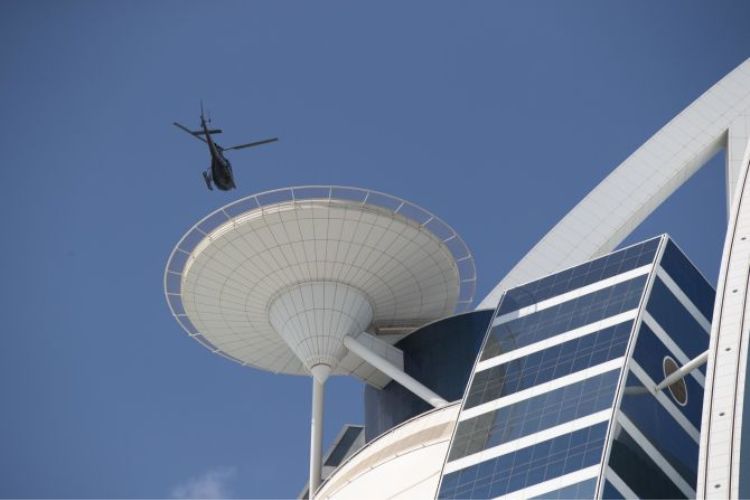
Elevated Helipads (Rooftop / Platform)
These require:
- Structural engineering approval
- Load-bearing calculations
- Anti-vibration pads
- Wind analysis
Never build an elevated helipad without an engineer. Safety requirements are stricter.
4. Surface Material & Finishing
A safe helipad surface must be:
- Non-slip
- Heat-resistant
- Capable of handling rotor wash
Common materials:
- Reinforced concrete (most reliable)
- Aluminum or steel plates (common in offshore platforms)
- Composite helipad panels
Avoid loose gravel, rotor wash will turn it into dangerous debris.
5. Drainage System
Water pooling is unsafe. Good drainage includes:
- Slight slope: 1–2% gradient
- Edge channels or runoff paths
- Water exit points away from approach paths
This prevents skidding and reduces damage to the helipad surface.
6. Markings and Lighting
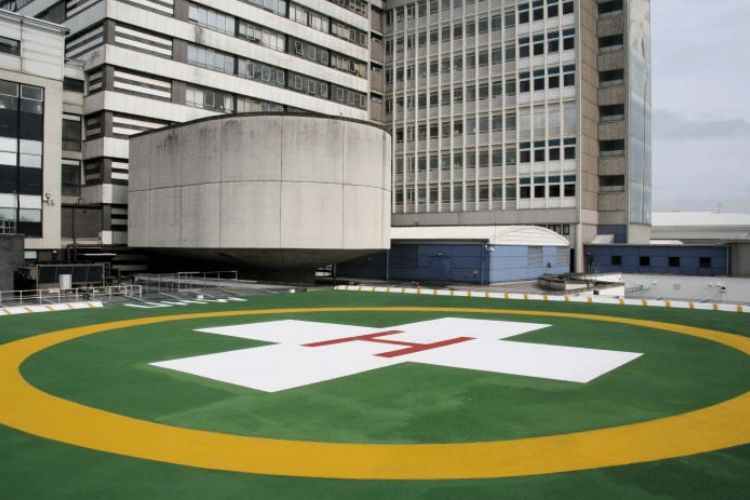
Standard Helipad Markings
Include:
- A white “H” in the center
- Load limit (e.g., 3,000 kg)
- Directional arrow if required
- Circle boundary line in contrasting color
The “H” should be oriented with the pilot’s preferred landing direction.
Lighting (If Used at Night or in Low Visibility)
Install:
- Perimeter LED lights (in aviation-approved colors)
- Floodlights angled away from approach paths
- Windsock with lighting
Lights must not blind the pilot, soft, directional illumination is key.
7. Install Safety Features
A professional helipad should include:
- Fire extinguishers or foam system
- Wind indicator (windsock)
- Fencing or barriers to keep people away
- Non-slip paint or coating
- Clear access pathways
For commercial or medical helipads, additional requirements may apply (depending on local aviation laws).
8. Certification & Approvals
Before using the helipad, you may need:
- Aviation authority inspection
- Fire safety approval
- Structural engineering verification
- Noise assessment
Every country has different rules. In most places, even private helipads must meet minimum safety standards.
9. Maintenance
A helipad isn’t “set and forget.” Regular maintenance ensures long-term safety:
- Inspect for cracks
- Repaint faded markings
- Check lighting systems
- Clear debris and vegetation
- Reassess load capacity every few years
Helicopter operators expect clean, safe landing conditions at all times.
Final Thoughts
Building a helicopter landing pad may sound complex, but it becomes an approachable project when you follow the right standards and safety guidelines. From choosing a stable location to planning structural support, surface materials, lighting, and proper markings, every step plays an important role in ensuring safe landings and takeoffs. When these elements are aligned correctly, your helipad doesn’t just meet aviation requirements, it becomes a reliable, long-term asset.
Whether for private use, emergency operations, or commercial needs, a well-built helipad provides convenience, confidence, and consistent performance for years to come.